After more than two decades at Yonsei, its first foreign dean urges students to “invest in what you love”
Behind each university’s global ambitions are choices about what to preserve, what to develop and where to go next. In “World Class,” The Korea Herald interviews leaders of Korean universities about the strengths they are cultivating and the futures they envision. — Ed.
When John Frankl first arrived at Yonsei University as an American exchange student in the late 1980s, he found a far more insular institution than the globally oriented university he knows today.
Nearly four decades later, the former exchange student is helping lead part of the university.
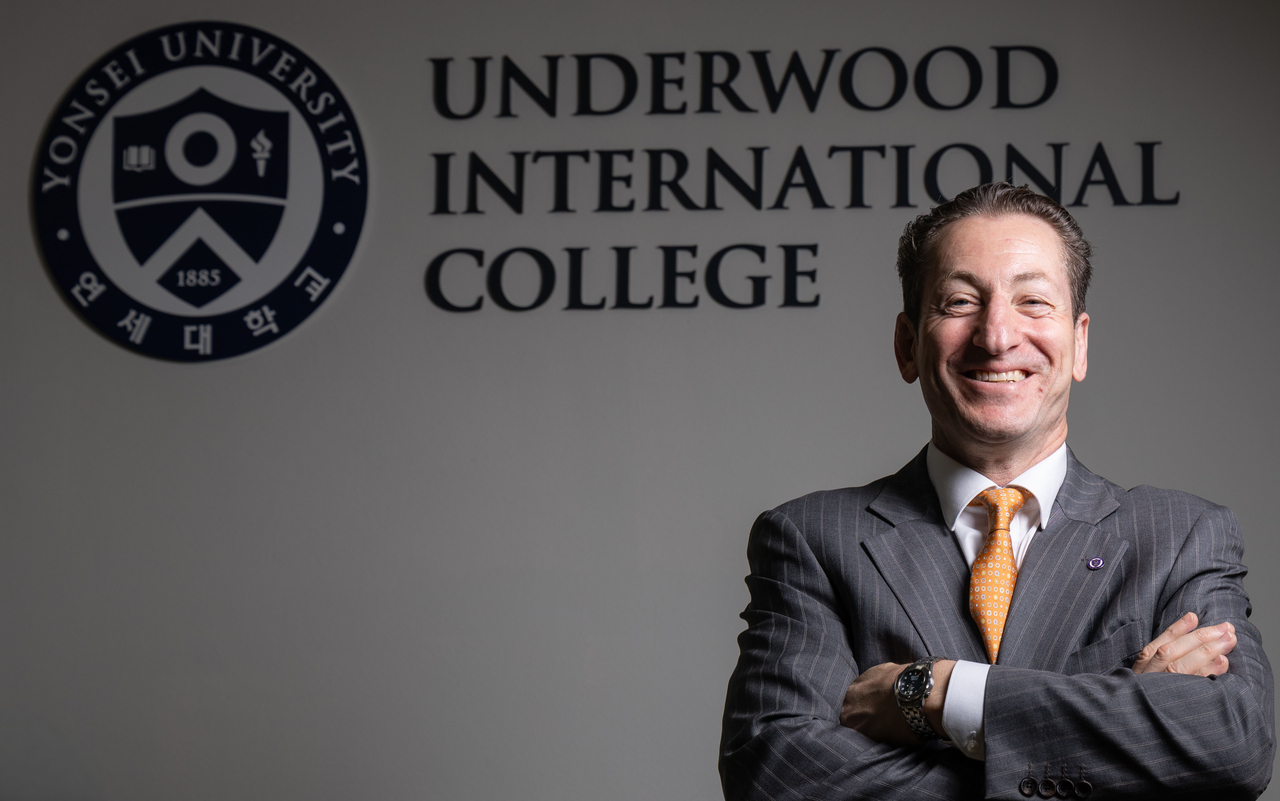
Frankl, a professor of Korean and comparative literature, became dean of Yonsei’s Underwood International College this spring, after more than two decades on the faculty and several administrative posts, including two stints as an associate vice president at the Office of International Affairs.
His path from international student to professor and dean offers a perspective on how Korean universities are moving beyond simply attracting more foreign students and faculty.
“I think most faculty and most students are really considering themselves as part of a global university that happens to be located in Korea rather than just a Korean university,” Frankl said in an interview with The Korea Herald on Sept. 17 at Yonsei University's Sinchon campus in Seoul.
“And that’s been a welcome change because as an international student and then an international faculty member, I just feel more comfortable and more welcome.”
An accidental journey to Korea
Frankl’s nearly four-decade relationship with Yonsei was hardly planned.
Growing up in Santa Cruz, California, he had little exposure to Korea before attending the University of California, Berkeley. He began studying Korean partly out of an interest in martial arts.
After Berkeley announced an exchange program with Yonsei, Frankl came to Korea for the 1988-89 academic year. He eventually shifted his focus to Korean language and literature.
He returned to Yonsei for a master’s degree before completing his doctorate at Harvard University. Even then, a career in Korea was not part of the plan. Frankl had repeatedly considered law school and expected to become a professor in the United States.
That changed in 2005, when Yonsei was preparing to launch UIC. Former professors who had become university administrators approached him about joining what they described as a new “international college.”
“I was a little bit wary,” he recalled, wondering whether the project would become a genuine college or merely a revenue-generating program. He signed only a three-year contract.
Within a year or two, however, he was convinced.
“The president was putting resources into it,” Frankl said. “Yonsei was and is very serious about this.”
UIC was soon elevated from a division to Yonsei’s 22nd standalone college. Frankl sees that move as an important sign of the university’s commitment: UIC was placed alongside established colleges such as medicine and business rather than remaining an international division.
Continuing Yonsei’s grand experiment
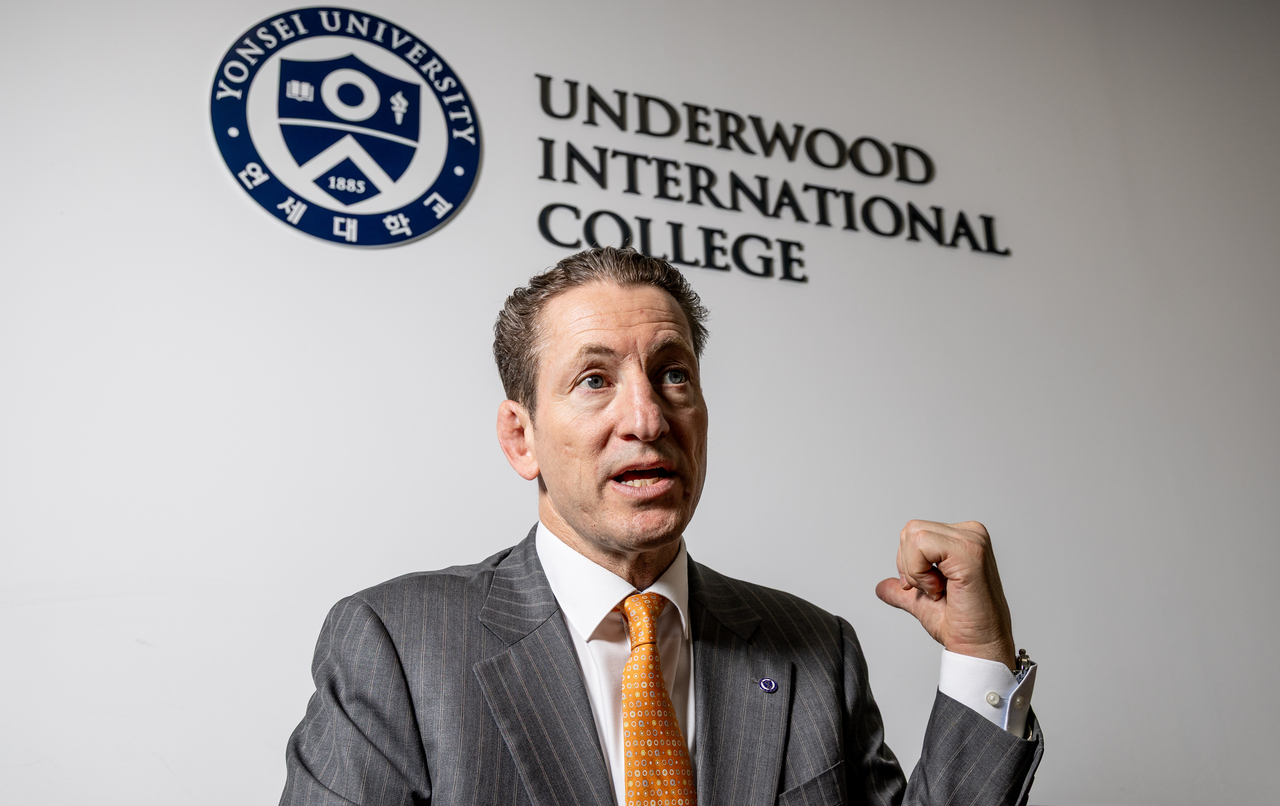
Frankl said he has watched Yonsei shift over the past four decades from a largely domestic focus toward a more global outlook.
“When I was first here in the 80s, it was kind of like, ‘Oh, Seoul National and us, and how do we measure against Korea University?’ Very domestically minded,” he recalled. He said the focus later shifted to breaking into the world’s top 100 universities and then the top 50.
He has also seen the vision of UIC’s first deans take shape as the college grew into Yonsei’s second-largest, after the College of Engineering, bringing together Korean and international students and faculty.
UIC has also attracted international attention, becoming the only Korean university program on Forbes’ 2026 list of 15 international colleges for US students.
“When I was here in the late ’80s, it was very insular,” Frankl said. “Now, so many of the students have lived abroad and there are so many foreign students.”
As dean, Frankl said, he wants UIC to prepare students to navigate a rapidly changing world. Its English-language liberal arts curriculum requires students across majors to take common courses in subjects including world history, world literature and philosophy, with an emphasis on writing and critical thinking.
He believes the model has gained new relevance with the rise of generative artificial intelligence, as students need to think critically, write and grapple with questions of philosophy and ethics.
His own classes have become increasingly “analog.” Frankl has returned to handwritten, in-class essays and translations, accepting rougher work in exchange for knowing the argument is the student’s own.
He compares the approach to taking a train rather than walking. If the goal is to reach Busan efficiently, taking the KTX makes sense, he said. But “when you take the KTX to Busan, you don’t expect your legs to be stronger,” he added. If the objective is training, choosing the less efficient method can be the point.
Becoming an insider
Frankl’s rise through Yonsei also highlights barriers that international faculty can face when trying to become more than visitors to Korean universities.
He said his appointment came relatively late: Professors who joined UIC after him and had less administrative experience became dean before he did.
“In some sense I think they were reluctant at first to have an international faculty member serve as the dean of the college,” he said.
One concern, he said, was whether an international professor could navigate a university where much of the senior administration is conducted in Korean.
Some barriers remain. UIC holds internal meetings in English, but university-level meetings are generally conducted in Korean. Yonsei has made more administrative systems available in English, although some remain difficult for international faculty to navigate.
Frankl nevertheless believes Yonsei is “ahead of the curve” among Korean universities, based on what he has heard from colleagues elsewhere.
“I always say direction, not perfection,” Frankl said. While Yonsei still has room to improve, he said its internationalization gets better every year.
At the same time, he does not believe internationalization means universities alone must adapt.
“No matter how international Yonsei or any other university in Korea gets, we are in Korea,” Frankl said.
International students and faculty do not have to become experts in Korean culture, he said, but investing in the language and understanding the culture “will pay large dividends.”
“There’s like a certain sense of reciprocity — at least meet me halfway,” he said. “We’re trying to be global and we’re trying to be international, but you came here and it’s Korea.”
International, but not separate
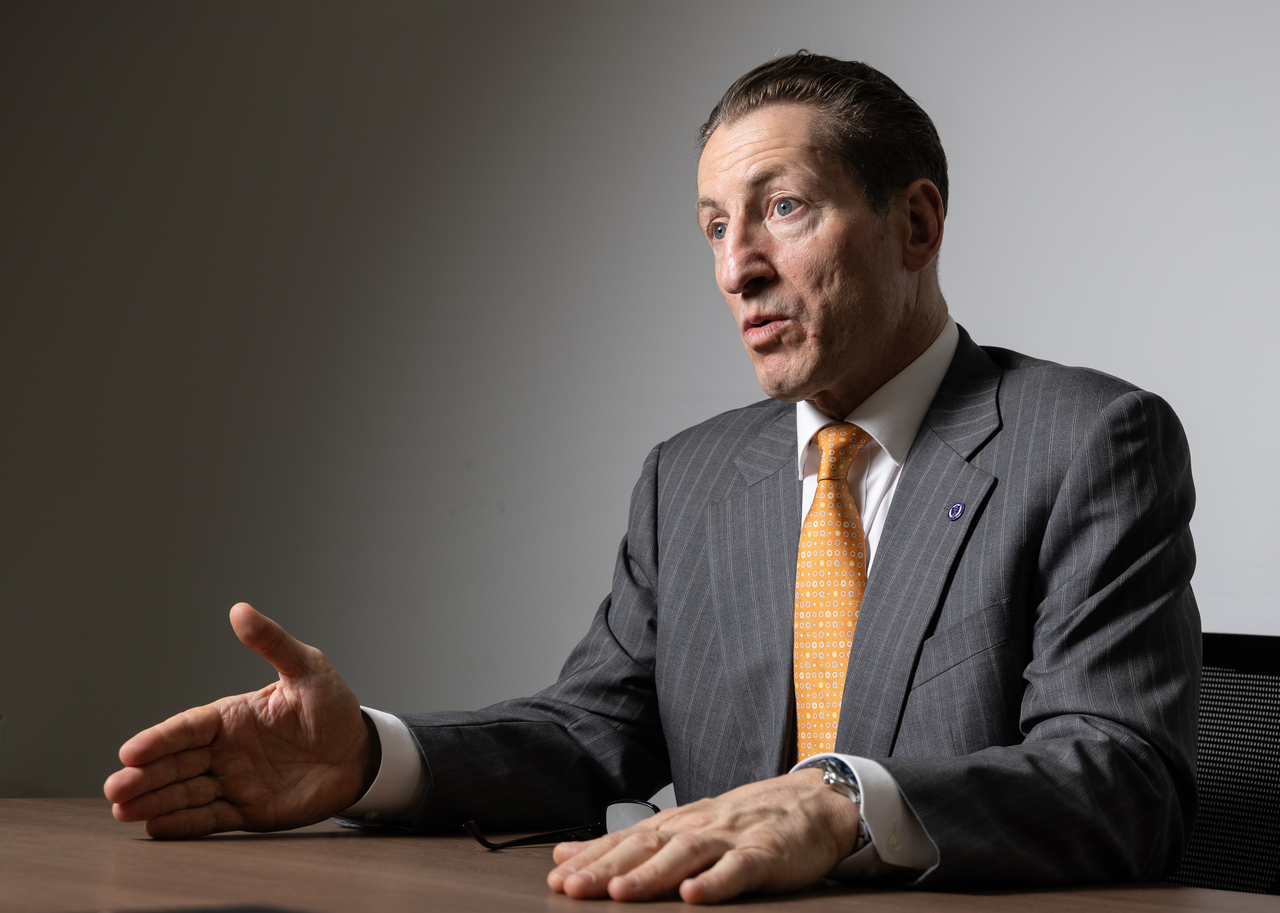
As UIC spent two decades establishing itself as an international college, Frankl said one of his priorities as dean is to make it less exceptional within Yonsei.
When Yonsei President Yoon Dong-sup asked him to take the job, Frankl said the president repeatedly emphasized “harmony” within a college that has grown quickly and brought together an increasingly diverse faculty.
Frankl is seeking greater transparency and clearer decision-making, with proposals moving through majors and divisions rather than informal channels. He argues that continually seeking exceptions for UIC because it is international risks reinforcing its separation from the rest of Yonsei.
His own career reflects that effort to become part of the institution. For international students hoping to build a life in Korea, however, Frankl cautions against treating his path as a blueprint. His career in Korea, he said, was never part of a “master plan.”
Instead, as technology and labor markets change too quickly to predict, he advises students to focus on “excellence and sincerity.”
“Don’t speculate. Things are changing too quickly to speculate. Invest,” Frankl said.
“Just invest in what you really love, and be ready to pivot.”
seungku99@heraldcorp.com